Welcome to the “Other Happiness & Resilience Related Talks and Books” section — a space where science meets self-understanding, and joy becomes a serious subject.
🌼 Curated Talks & Books
[+]
1. {BOOK} [Man’s Search for Meaning | Book By Viktor Frankl ]
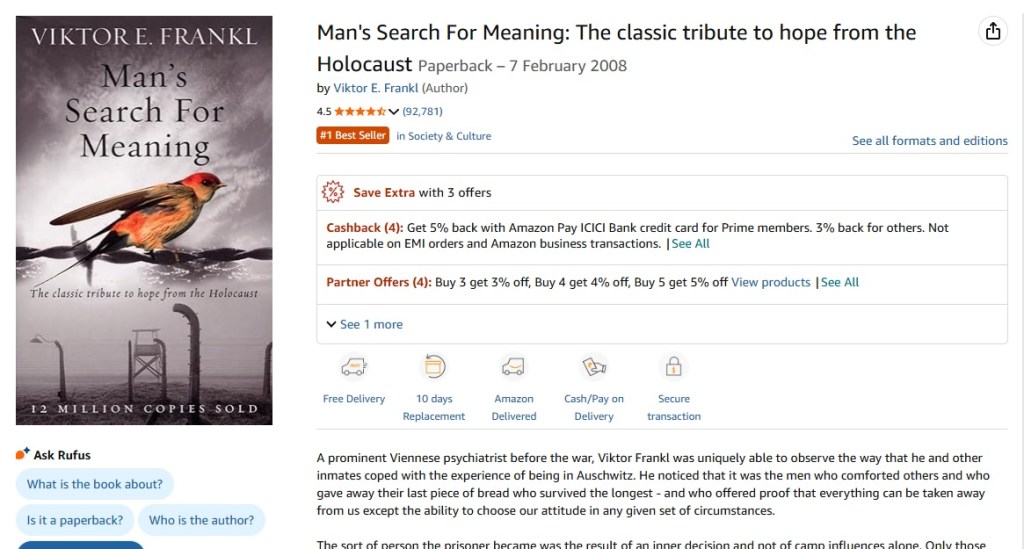
Authors: Viktor E. Frankl
Summary:
First published in 1946, Man’s Search for Meaning is one of the most influential works of the 20th century. In this book with insights par excellence, psychiatrist and Holocaust survivor Viktor Frankl reflects on his experiences in Nazi concentration camps and the psychological strategies that helped him and others endure unimaginable suffering.
Central to the book is Frankl’s philosophy of logotherapy, which posits that the primary drive in human beings is not pleasure (Freud) or power (Adler), but the search for meaning. Frankl shows how even in the direst circumstances, finding purpose — whether through love, work, or courage in the face of hardship — can give life profound value and sustain resilience.
The book has inspired millions worldwide, offering a timeless message: while we cannot always control our circumstances, we can choose our response and cultivate meaning, even in suffering. Man’s Search for Meaning remains a cornerstone of resilience literature and a guide for living with dignity and purpose.
[+]
2. { TALK } [New Happy | Stephanie Harrison @ Google ]
Speaker: Stephanie Harrison
Summary:
Stephanie Harrison, founder of The New Happy, explores the flaws in society’s traditional view of happiness—what she calls “Old Happy”—which centers on individualism, achievement, and material success.
In contrast, The New Happy philosophy proposes that true happiness comes from embracing your unique gifts and using them to help others, creating joy through connection and mutual well-being.
She emphasizes that happiness isn’t a solitary pursuit, but a shared experience rooted in community, kindness, and intentionality.
The talk encourages everyday acts of compassion as powerful tools to transform personal and collective happiness.
[+]
3. [Productivity and Mental Wellness in the Workplace | Anand Manikutty @ IEEE + CSI + ACM]
[+]
Speaker: Anand Manikutty
Summary:
In this thought-provoking and wide ranging Prelego (trans. : “Talk”) sponsored by the IEEE Society (Chennai chapter), the ACM Society (Chennai chapter) and the Computer Society of India, Anand Manikutty explores how happiness science intersects with workplace productivity.
Drawing on psychology research from Sonja Lyubomirsky, Martin Seligman, and Dan Gilbert, he presents the 50-10-40 Rule of Happiness — and how intentional activities, not life circumstances, hold the key to well-being. He critiques popular frameworks like Ikigai, emphasizes the importance of clean data in social science, and offers simple, research-backed tools to improve mood, focus, and fulfillment — without the hype. Please note, this is the original recording from the YouTube channel “CSI ACM IEEE CS Chennai Webinars” and has not undergone Fulmo’s standard post-production, which normally adds an intro, outro, and other branded elements.
🖥️ Slides + More: facebook.com/NamasteBharatDigitalOnline
[+]
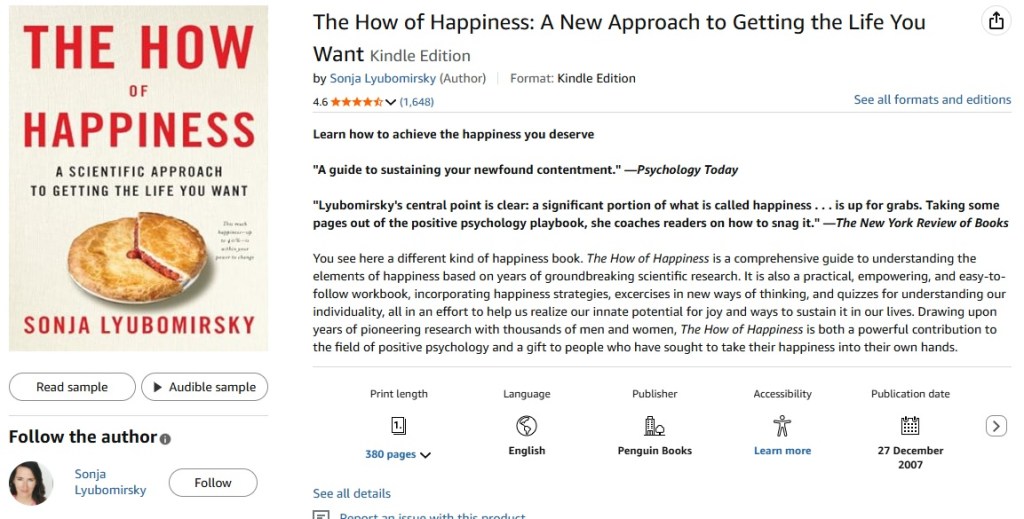
4. { BOOK } [The How of Happiness | Book by Sonja Lyubomirsky ]
[+]
Author: Sonja Lyubomirsky
Summary:
The How of Happiness is a science-based guide to understanding and increasing well-being, written by research psychologist Sonja Lyubomirsky. Drawing on decades of empirical studies, she introduces the “50-10-40 formula” of happiness: about 50% of our happiness is determined by genetics, 10% by life circumstances, and 40% by intentional activities.
Lyubomirsky emphasizes that sustainable happiness comes not from external achievements or possessions, but from deliberate practices. She outlines evidence-based strategies such as cultivating gratitude, practicing kindness, nurturing social relationships, developing optimism, and savoring life’s pleasures. Each chapter pairs research findings with practical exercises that readers can tailor to their own lives.
Accessible and optimistic, The How of Happiness bridges scientific rigor with everyday applicability. It has become a foundational text in positive psychology, inspiring individuals and programs worldwide to adopt intentional activities that foster long-term joy and resilience.
[+]
5. { BOOK } [Option B: Facing Adversity, Building Resilience, and Finding Joy | Sheryl Sandberg & Adam Grant ]

Speaker: Sheryl Sandberg & Adam Grant
Summary:
Option B combines Sheryl Sandberg’s deeply personal story of loss with Adam Grant’s research on psychology and resilience. After the sudden death of her husband, Sandberg confronted profound grief and the challenge of raising her children alone. With Grant’s guidance, she explores how people can build resilience and rediscover joy after trauma, loss, or adversity.
The book emphasizes practical strategies such as developing self-compassion, fostering community support, and finding strength in shared experiences. It also highlights the importance of resilience in organizations, showing how leaders and workplaces can support people in recovery and growth after setbacks.
Blending moving personal narrative with evidence-based insights, Option B offers both comfort and actionable tools. It affirms that while we cannot always choose our circumstances, we can choose resilience, rebuild meaning, and find joy in the aftermath of hardship.
[+]
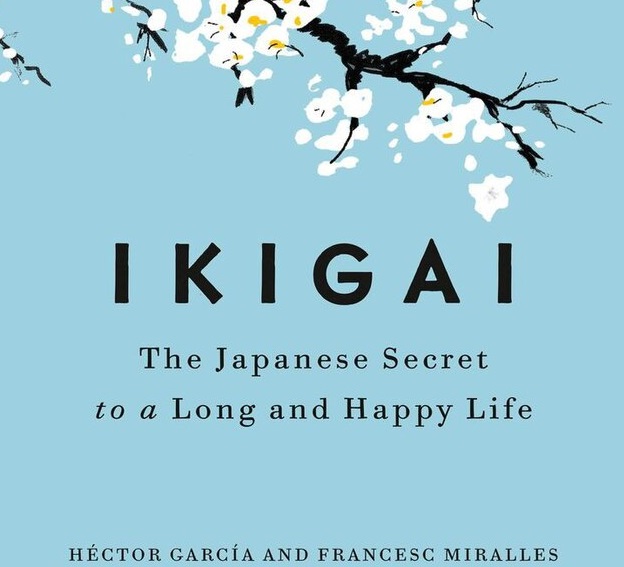
6. {BOOK} [ Ikigai | Book by Héctor García & Francesc Miralles ]
Summary:
Ikigai introduces readers to the Japanese concept of “ikigai” — often translated as “a reason for being.” The book blends cultural wisdom from Okinawa, one of the world’s “Blue Zones” known for longevity, with lessons from psychology and philosophy to explore how people can discover purpose and fulfillment in daily life.
García and Miralles highlight four essential elements that intersect in ikigai: what you love, what you are good at, what the world needs, and what you can be paid for. Through anecdotes, practical reflections and more, they illustrate how a simple, balanced lifestyle — including community, diet, movement, and mindset — contributes to happiness and long life. Written in a clear and accessible style, Ikigai has become an international bestseller, inspiring readers worldwide to rethink success, cultivate resilience, and pursue meaning over material achievement.
Critiques and comments: The concept of people being able to or required to find their own Ikigai, and the practicality of that idea, has been critiqued by critics, including Mr. Deepak Jayaraman who has come out with his own model, the FLAVOUR model. Mr. Deepak Jayaraman hosts the “Play to Potential” podcast.
[+]
7. {TALK} [ Chatbots, Social Media, Happiness and the Ekzercado Method | Anand Manikutty @ Talk hosted by IEEE Society, ACM Society, CSI, IEEE LMAG – Chennai Chapter ]
[+]
Speaker: Mr. Anand Manikutty
Summary: In this humorous and wide-ranging Fulmo Talk, Anand Manikutty explores big ideas from the world of Happiness Research through unexpected stories, sharp observations, and surprising detours. With wit and curiosity, he draws connections between everyday life and cutting-edge science, showing how delight and meaning often hide in plain sight.
He also introduces La Gxoja Filozofio, a new Philosophy intended to be a rival to ancient philosophies such as Stoicism and Epicureanism, as well as modern ones, such as Existentialism. He covers two tools that anyone can use to increase their own happiness levels, with the second tool requiring less than 20 minutes of effort per day. Along the way, he leaves the audience thinking — and reflecting deeply about what it truly means to live a happy life and how simple tools can be used to increase happiness levels and mental well-being.
[+]
8. { BOOK} [ The Happiness Equation | Book by Neil Pasricha]
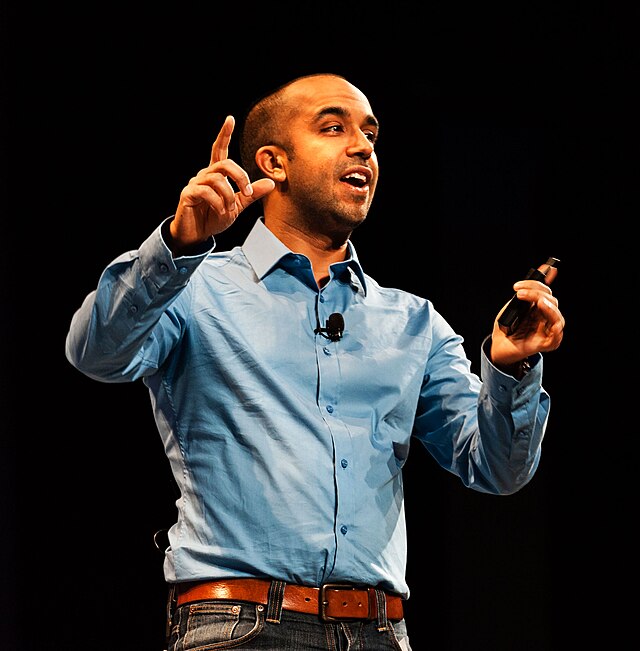
Image Credit: Wikimedia Commons
[+]
Summary:
In The Happiness Equation, Neil Pasricha distills decades of positive psychology research, personal experience, and real-world examples into nine clear “secrets” for living a happier life. Unlike traditional success-driven models—where we believe success must come before happiness—Pasricha flips the equation: according to Parsicha, happiness itself is the precursor to success.
Through engaging stories, memorable acronyms, and practical exercises, Pasricha emphasizes that happiness is not something we chase after external achievements, but something we can build deliberately every day. He explores themes such as reducing choice overload, creating habits of gratitude, and embracing doing things for oneself as a mindset to foster joy from within.
The book is written in an accessible style, making complex ideas feel simple and actionable. Whether read cover-to-cover or dipped into for quick inspiration, The Happiness Equation offers both a philosophy and a toolkit for cultivating joy, resilience, and meaning in daily life.
[+]
9. {BOOK} [ Attitude is Everything | Book by Jeff Keller]
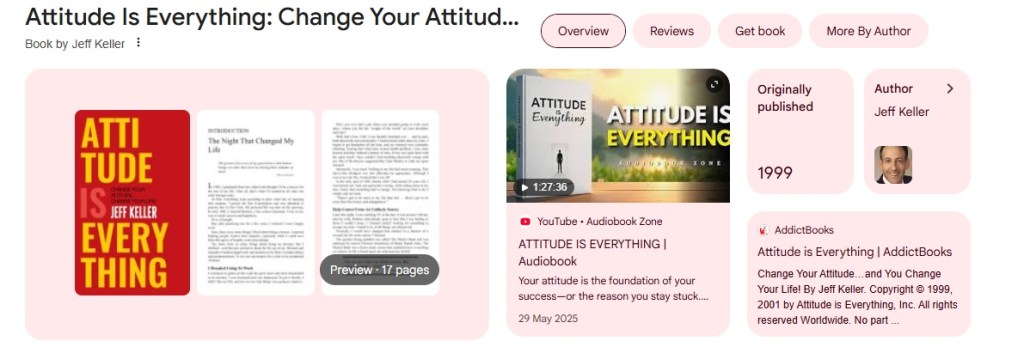
Screenshot by Delphic Ventures LLC
Screenshot of Google search results for “Attitude Is Everything Jeff Keller.” Used here for reference/educational purposes.
Summary:
In Attitude Is Everything, motivational speaker Jeff Keller explores how a positive mindset shapes both personal happiness and professional success. The book is structured around a few core concepts, each offering simple yet powerful strategies for reframing negative self-talk, adopting a positive attitude, and taking consistent actions toward your goals. Through relatable anecdotes and practical tips, Keller illustrates how changing the way we think enables us to directly influence our results.
Written in an accessible, conversational style, Attitude Is Everything serves as both a motivational guide and a pragmatic toolkit, emphasizing that happiness and success often follow naturally from cultivating optimism, resilience, and intentional action.
[ Link: View on Amazon ]
[+]
10. {BOOK} [ Grit: The Power of Passion and Perseverance | Book by Angela Duckworth ]
Summary:
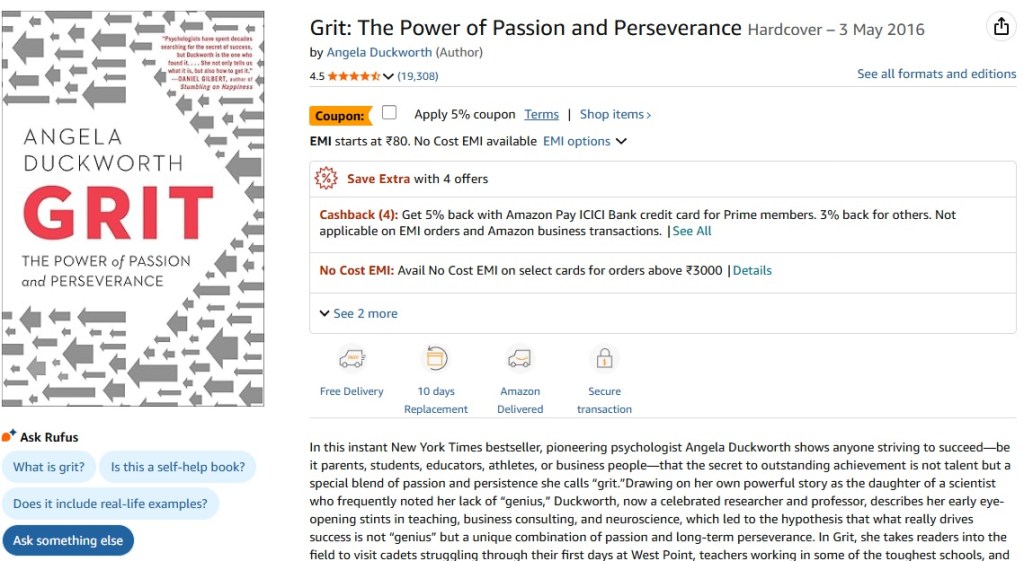
In Grit, psychologist Angela Duckworth argues that success is driven less by talent and more by a unique blend of passion and perseverance she calls “grit.” Drawing from years of research, case studies, and personal experiences, Duckworth demonstrates how individuals who sustain effort and interest over the long term are more likely to achieve their goals than those who rely solely on natural ability.
She highlights stories from cadets at West Point, teachers in challenging schools, and high achievers across fields—from business to athletics—to illustrate how grit predicts accomplishment beyond what IQ or raw talent can explain. The book also offers practical advice for cultivating grit in ourselves and encouraging it in others, emphasizing the role of deliberate practice, resilience, and a growth mindset.
Accessible and evidence-based, Grit has become a touchstone in psychology, education, and leadership, inspiring readers to reframe how they think about achievement and long-term fulfillment.
[+]
11. {BOOK} [ Tomorrowmind | Book by Martin Seligman & Gabriella Rosen Kellerman ]
[+]
Authors: Martin Seligman & Gabriella Rosen Kellerman
Summary:
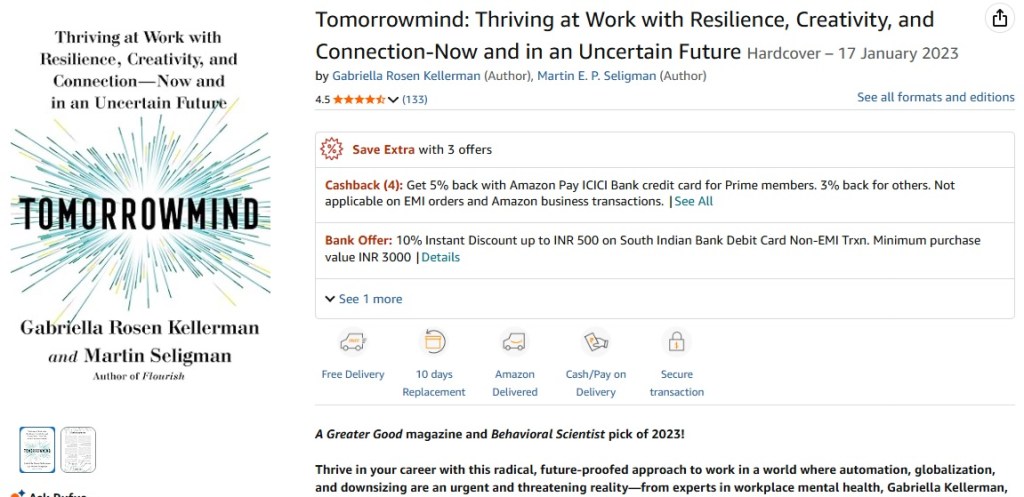
Tomorrowmind brings the science of positive psychology into the future of work. Co-authored by Martin Seligman, the founder of positive psychology, and Gabriella Rosen Kellerman, a physician and leadership expert, the book addresses the challenges of a rapidly changing world shaped by automation, globalization, and shifting workplace norms.
The authors argue that while technical skills may become outdated quickly, psychological skills will be the true differentiators in the workplace of tomorrow. They highlight five key capacities—prospection (the ability to imagine and plan for the future), resilience, innovation, social connection, and mattering (a sense of significance)—as essential for thriving in uncertain times.
Drawing on research as well as practical examples, Tomorrowmind provides individuals, leaders, and organizations with tools to cultivate these skills. It bridges cutting-edge psychology with real-world applications, making a case that well-being and adaptability are not luxuries but necessities for success in the 21st century.
Accessible, forward-looking, and grounded in evidence, Tomorrowmind offers a blueprint for personal and organizational resilience, helping readers prepare not just to survive but to flourish in the workplaces of the future.
[+]
12. {BOOK} [Flourish | Book by Martin Seligman ]
Summary:
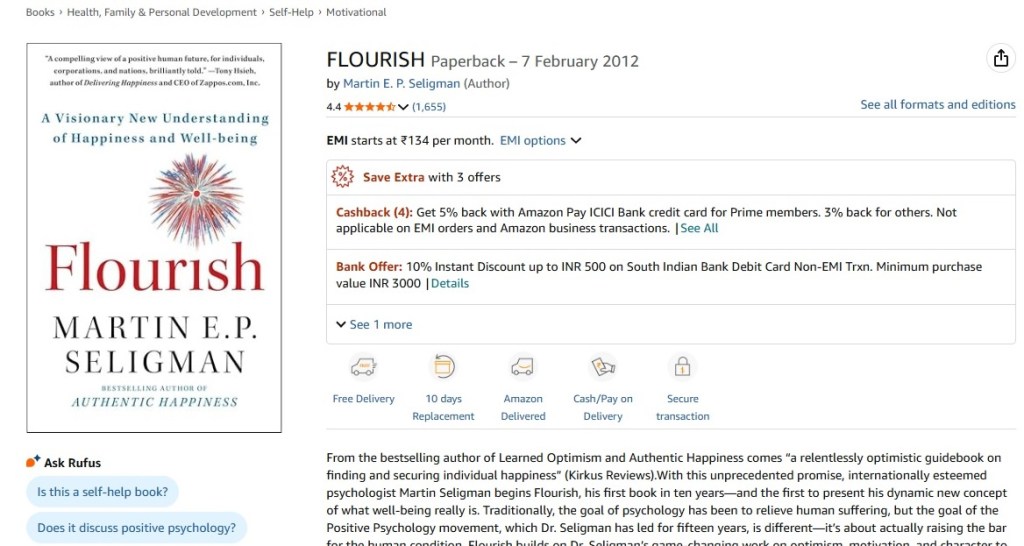
In Flourish, Martin Seligman — often called the father of positive psychology — expands his earlier work on happiness to present a broader model of human well-being. He introduces the PERMA framework, which identifies five essential elements of flourishing: Positive Emotion, Engagement, Relationships, Meaning, and Accomplishment.
Moving beyond the pursuit of happiness alone, Seligman argues that well-being is multi-dimensional and can be cultivated through deliberate practices such as gratitude, strength-based exercises, and building social connections. He also explores applications of positive psychology in education, therapy, and public policy.
[+]
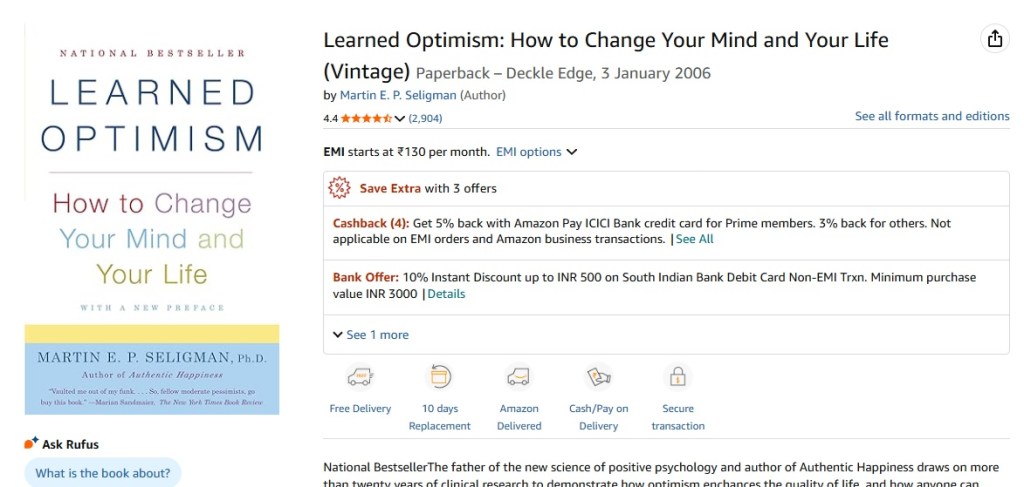
13. {BOOK} [Learned Optimism | Book by Martin Seligman]
Summary:
In Learned Optimism, Martin Seligman presents groundbreaking research showing that our explanatory style — the way we interpret successes and setbacks — profoundly shapes our resilience, motivation, and overall happiness. He argues that pessimism, while common, can be unlearned and replaced with more optimistic patterns of thought that foster well-being and achievement.
Drawing on studies in psychology, education, and health, Seligman explains that optimists view difficulties as temporary, specific, and changeable, while pessimists see them as permanent, pervasive, and personal. This difference not only impacts mental health, but also influences physical health, career success, and relationships. The book provides practical strategies and exercises for recognizing negative self-talk, disputing irrational beliefs, and reframing adversity with a growth-oriented mindset.
Accessible and empowering, Learned Optimism remains a classic text in positive psychology and resilience training. It offers readers a toolkit for cultivating optimism, building psychological strength, and transforming challenges into opportunities for growth.
[+]
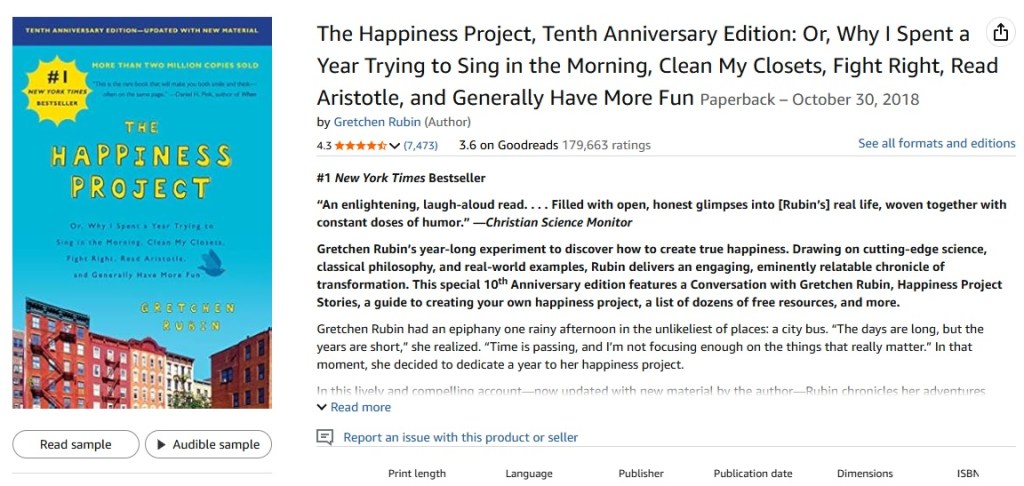
14. { BOOK} [ The Happiness Project | Book by Gretchen Rubin ]
Summary:
In The Happiness Project, Gretchen Rubin chronicles her year-long experiment to test whether making small, deliberate changes in daily life can significantly boost happiness. Inspired by research in psychology, philosophy, and personal observation, she sets monthly resolutions across themes such as energy, work, love, play, money, and mindfulness.
Through relatable stories and practical tips, Rubin demonstrates how cultivating habits — from decluttering closets to maintaining friendships — can transform both mood and outlook. She emphasizes that while happiness does not come from a single breakthrough, it can grow through consistent, intentional practices embedded in ordinary life.
Blending memoir with self-help, The Happiness Project offers a mix of personal reflection and actionable ideas. It encourages readers to design their own experiments, tailoring happiness strategies to their unique lives, and has inspired a global movement of readers pursuing their own “happiness projects.”
[+]
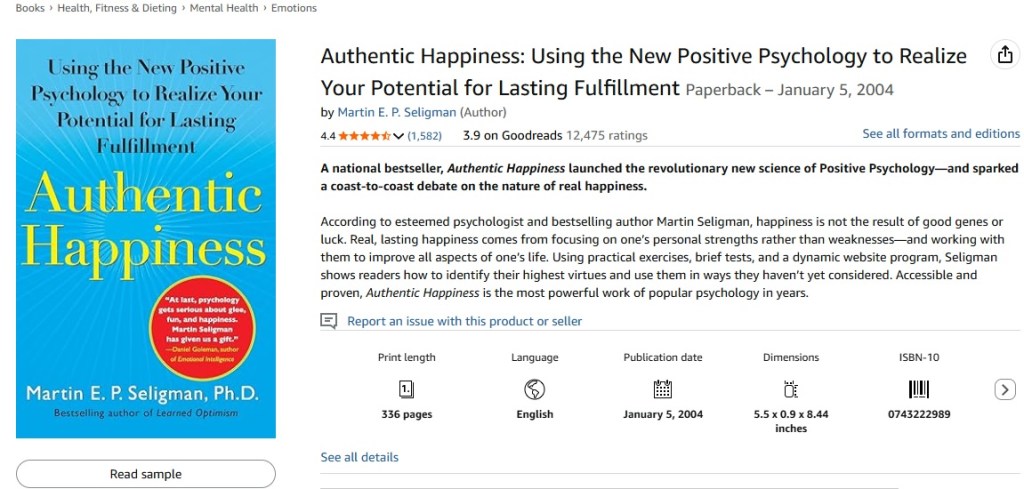
15. {BOOK} [ Authentic Happiness | Book by Martin Seligman ]
[+]
Summary:
In Authentic Happiness, Martin Seligman — often called the founder of positive psychology — introduces readers to the science of well-being and offers a framework for cultivating lasting happiness. Drawing on decades of research, he challenges the traditional focus of psychology on illness and instead emphasizes strengths, virtues, and positive emotions as keys to a fulfilling life.
The book outlines three distinct “orientations” to happiness: the Pleasant Life (pursuing positive emotions), the Good Life (engagement and flow), and the Meaningful Life (using one’s strengths in service of something larger than oneself). Seligman argues that while pleasure contributes to well-being, authentic and sustainable happiness arises when people identify their “signature strengths” and apply them in work, relationships, and daily activities.
Accessible, evidence-based, and practical, Authentic Happiness provides exercises, reflection prompts, and real-world examples to help readers recognize and build upon their strengths. It laid the foundation for the global movement of positive psychology, inspiring individuals, educators, and organizations to shift focus from what is wrong with people to what makes life most worth living.
[+]
21. [ Real Happiness at Work | Sharon Salzberg @ Google ]
 TalkSeries.Org